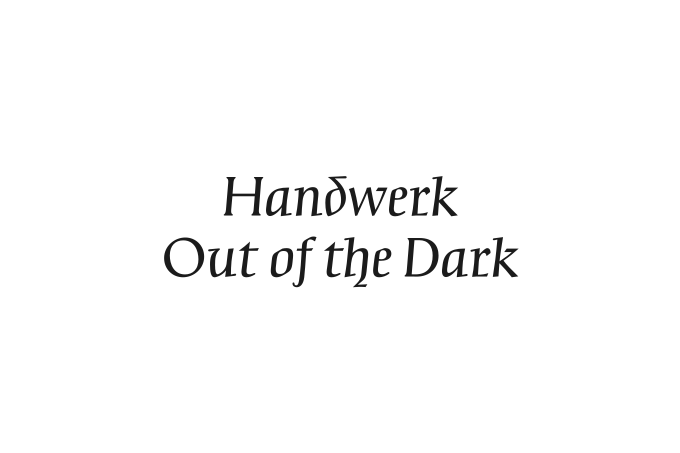
After close to a hundred years in obscurity, Handwerk is a fresh take on Berthold Wolpe’s first type design. Conceived as Wolpe Kursiv in 1932, its development was abruptly halted under the Nazi regime. As a Jewish designer, Wolpe faced persecution—his typeface renamed, delayed, altered, and scattered across decades. Informed by later versions but above all carrying forward the expressive qualities of the earliest version cut in metal by Paul Koch, Handwerk is a versatile font with extensive stylistic options—including blackletter capitals from Wolpe’s earliest drafts. Each glyph has been refined by avoiding straight lines whenever possible, aiming to restore the charmingly uneven rhythm of Wolpe’s hand-lettering style. Combined with capitals rooted in classic Roman alphabets, the typeface morphs between rustic and elegant, evoking a mystical impression. Two additional stylistic sets reference the streamlined 1952 iteration and the original blackletter capitals, making the complex history of these character shapes transparent. The name Handwerk pays tribute to Wolpe’s hands-on approach, shaped by his background in metalworking, and honours the earliest version of this remarkable typeface.